
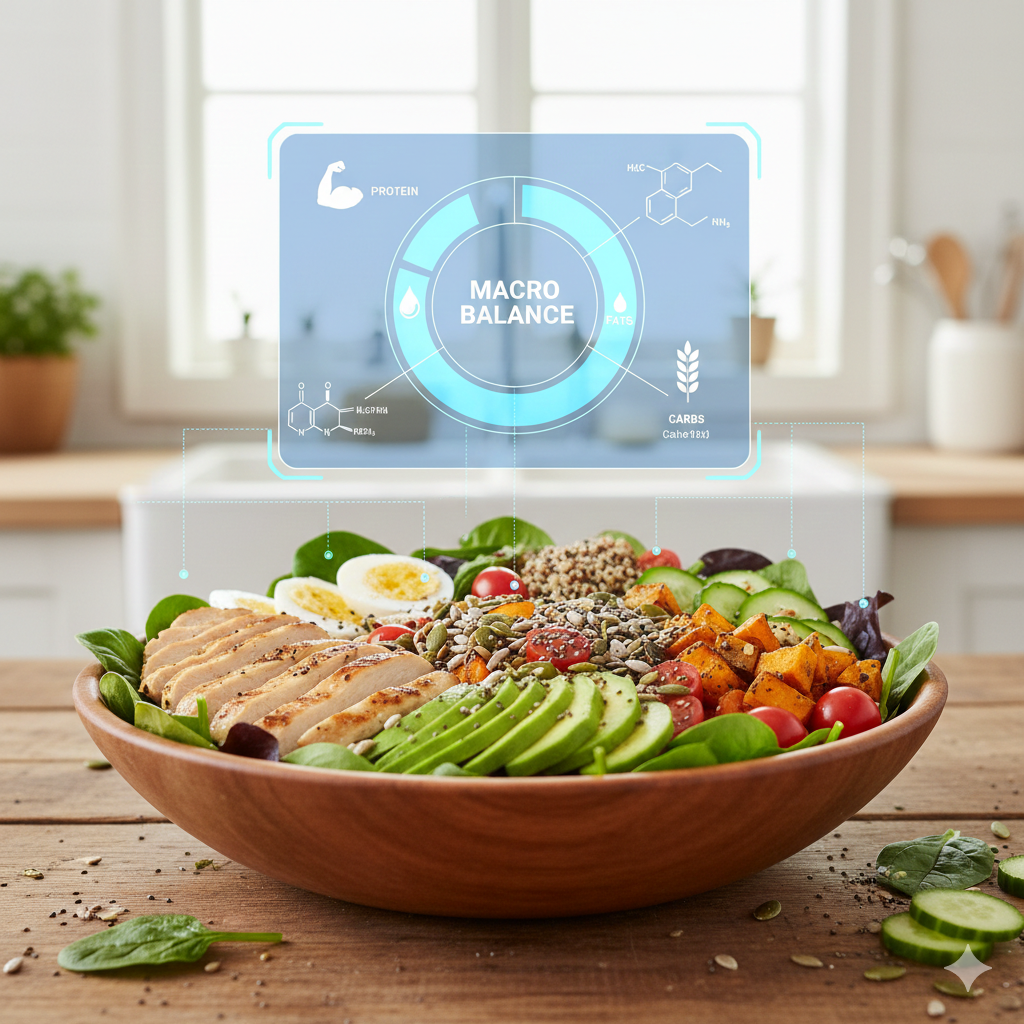
A salad isn’t “healthy” just because it’s green. Like the human body, a truly good bowl works only when all its parts are in balance. Too much of one thing, too little of another—and the system breaks.
Most salads fail not on taste, but on structure. They’re either all vegetables (you’re hungry in an hour) or overloaded with toppings and sugary dressings (you’re tired and heavy). The perfect salad sits in the sweet spot—where macronutrients work together, not against each other.
What Are Macros, Really?
Macros—short for macronutrients—are the three nutrients your body needs in large amounts: protein, carbohydrates, and fats. Each plays a distinct role, and skipping one is like removing a wheel from a car.
- Protein: Repairs tissues, supports muscles, and signals fullness.
- Carbohydrates: Provide energy, especially from fiber-rich plant sources.
- Fats: Support hormones, brain health, and vitamin absorption.
Protein: The Backbone of the Bowl
Protein is what turns a salad into a meal. Without it, hunger returns fast. With it, your body feels grounded and satisfied.
Sprouts, paneer, legumes, seeds, and nuts provide plant-forward protein that digests steadily and supports muscle maintenance—especially important if you’re active or managing blood sugar.
Carbs Done Right: Fiber First
Not all carbs are the enemy. In a well-built salad, carbohydrates come bundled with fiber, vitamins, and minerals—not refined sugars.
Vegetables, greens, sprouts, and fruits provide slow-releasing energy while feeding your gut microbiome. Fiber also acts as the internal traffic controller, slowing digestion and keeping energy stable.
Fats: The Unsung Hero
Healthy fats are often misunderstood, but they’re essential. They slow digestion, improve satiety, and help your body absorb fat-soluble vitamins like A, D, E, and K.
Olive oil, seeds, nuts, tahini, and natural dressings aren’t indulgences—they’re functional components of a complete bowl.
The SproutBites Way: Macro Harmony
At SproutBites, every bowl starts with balance. We don’t count calories—we design ratios. A strong protein base, fiber-rich vegetables, and just enough healthy fat to make nutrients usable.
No macro dominates. Each one supports the others.
Texture Is Part of Nutrition
Crunchy, creamy, tender, and crisp textures slow down eating and improve satisfaction. When your bowl has contrast, your brain registers fullness more accurately.
This is why seeds, raw vegetables, soft proteins, and dressings all matter. Texture isn’t aesthetic—it’s biological feedback.

BooBoo’s Quick Bite
BooBoo says: “If your salad is all leaves, you’ll be hungry. If it’s all toppings, you’ll feel heavy. The magic is balance. Protein to anchor you, fiber to keep things steady, and fats to tie it all together. That’s not a diet—that’s a smart bowl.”
A Salad That Actually Works
The perfect salad isn’t about restriction. It’s about design. When macros are balanced, energy lasts, cravings fade, and food finally feels supportive instead of confusing.
Build your bowl with intention. Your body will do the rest.