
Gut Health 101: How Fiber-Rich Salads Transform Digestion
For a long time, we thought of digestion as just a way to extract calories from food. Today, we know it's the center of our health. From our immune system to our mental well-being, everything starts in the gut.
The human gut is home to trillions of microorganisms, collectively known as the gut microbiome. These tiny residents are responsible for breaking down food, producing vitamins, and communicating with our brain. But to stay healthy, they need to be fed—and their favorite food is fiber.
Fiber: More Than Just a "Cleaner"
Most people think of fiber as something that just "keeps things moving." While that's true, fiber is much more than a biological broom. It is a complex carbohydrate that human enzymes cannot break down, which allows it to reach your lower intestine where your microbiome lives.
Soluble vs. Insoluble Fiber
A balanced gut requires a mix of both types of fiber:
- Soluble Fiber: Found in beans, sprouts, and some fruits, this fiber dissolves in water to form a gel-like substance. It helps slow down glucose absorption (preventing sugar spikes) and can help lower cholesterol.
- Insoluble Fiber: Found in leafy greens, whole grains, and vegetable skins, this fiber doesn't dissolve. It provides bulk and assists in the mechanical movement of food through your system.
The Microbiome Diversity Rule
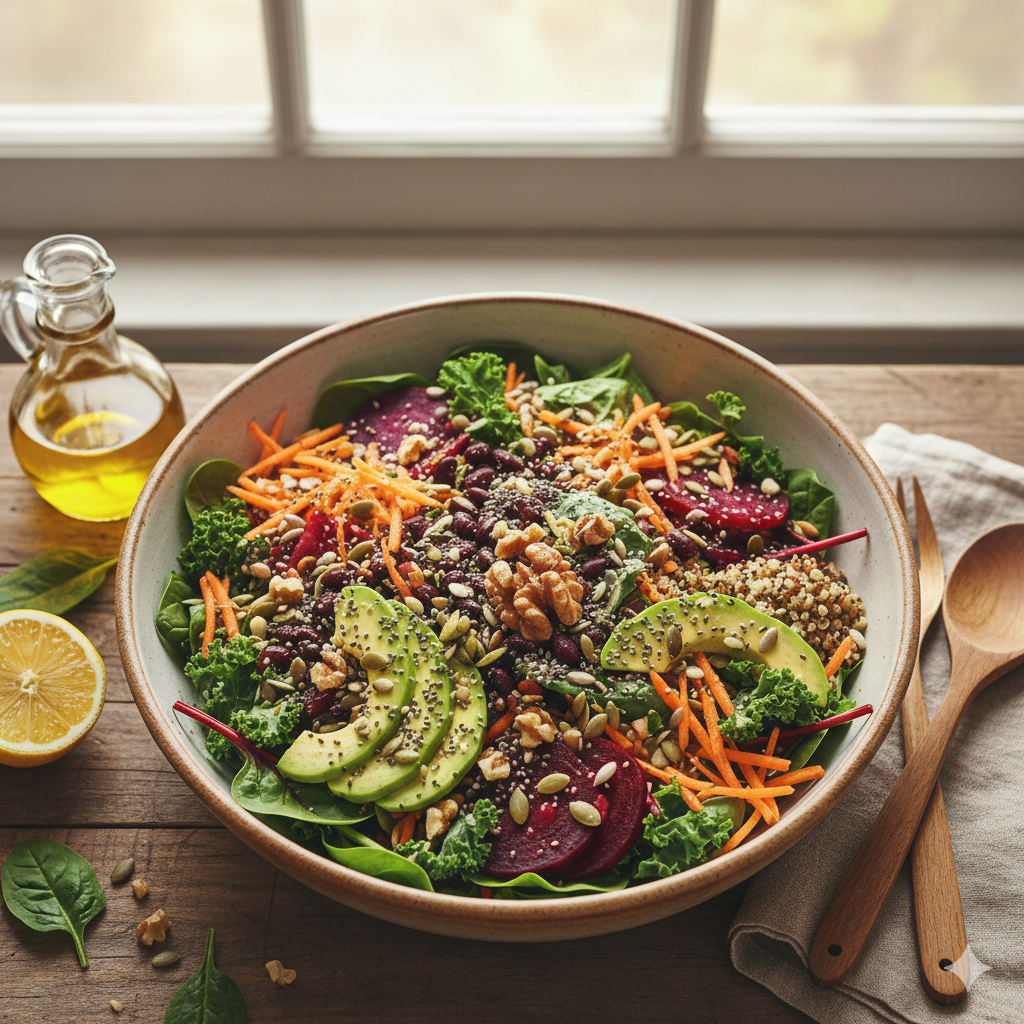
The most important discovery in recent gut science is that diversity matters more than quantity. Eating 30 grams of the same fiber every day is good, but eating different types of fiber from different plants is much better. Each type of plant contains different fiber structures that feed different strains of beneficial bacteria.
A healthy gut is like a diverse rainforest. When you eat a varied salad with ten different vegetables, you are supporting a wide range of bacteria that, in turn, protect you from pathogens and inflammation.
The SproutBites Approach to Gut Health
We don't just give you "greens." We give you a ecosystem. Our bowls are meticulously engineered to include at least 8-12 different plant sources, from chickpeas and walnuts to purple cabbage and alfalfa sprouts. We focus on Fiber Diversity to ensure your microbiome remains as vibrant and diverse as the ingredients in your bowl.
BooBoo's Quick Bite
So, according to BooBoo: 'Think of your gut like a garden! If you only plant one type of flower, it’s a bit boring, right? Your gut bacteria love a party, and the best way to invite them is with a variety of fiber. Don’t just eat "health food"—eat a rainbow! The more colors and types of plants you eat, the happier your inner bugs will be, and the better you’ll feel. Happy gut, happy you!'
The Gut-Brain Connection
Did you know that 90% of your body's serotonin—the "feel-good" hormone—is produced in your gut? This is why scientists now call the gut the "second brain." When your gut is inflamed due to a poor diet low in fiber, your mood can suffer. By prioritizing fiber-rich, fresh foods, you aren't just helping your stomach; you're helping your mind.